2024
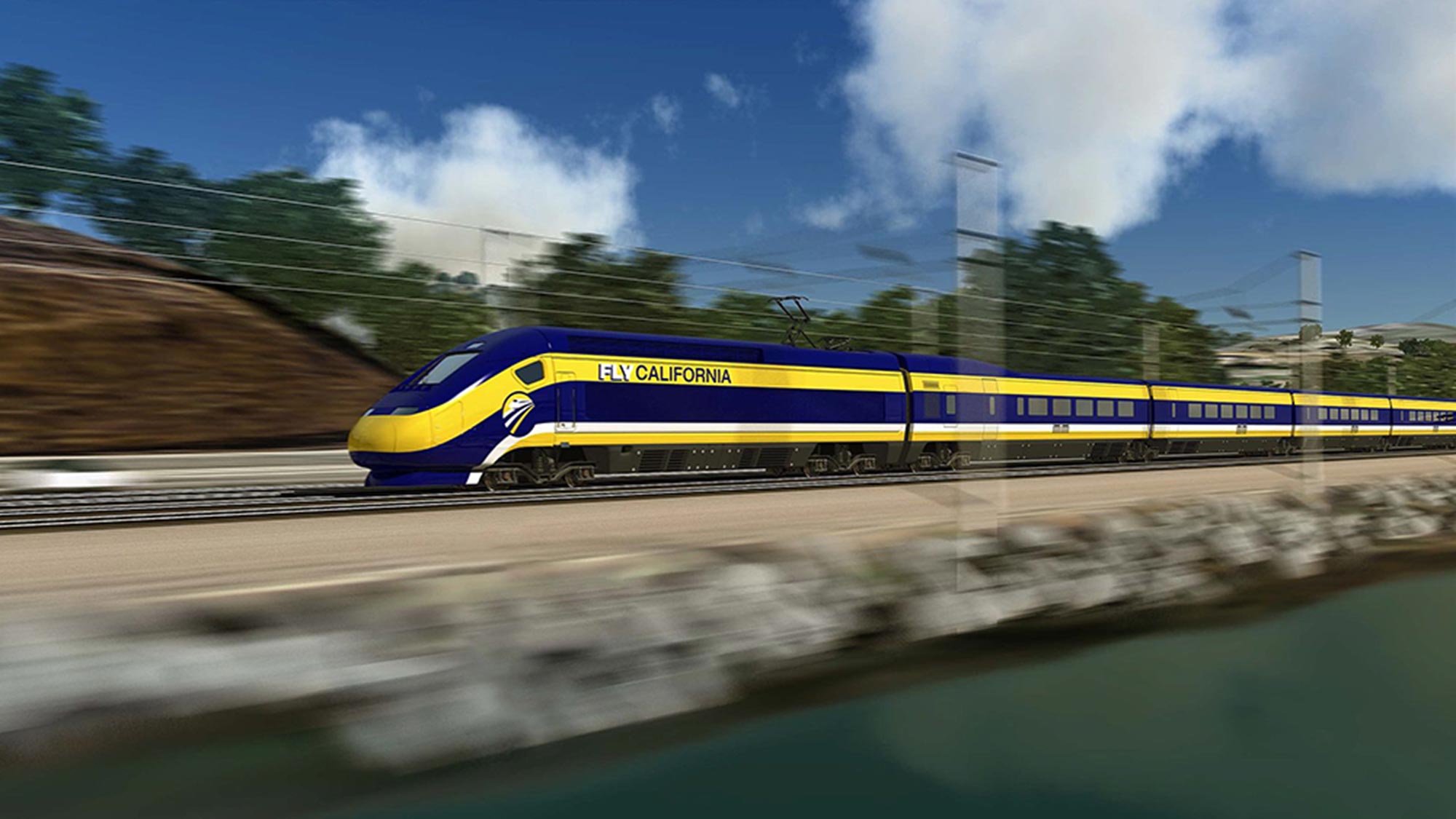
The Caltrain Modernization Program is electrifying the corridor from San Francisco to San Jose—improving the performance, operating efficiency, capacity, safety, and reliability of Caltrain’s commuter rail service. The new electric trains will replace the existing diesel-fueled locomotives and play a significant role in meeting state and regional goals to reduce greenhouse gas emissions.
The new electric trains also will be less noisy than the existing trains, and they will feature amenities such as new digital onboard displays, power outlets at each forward-facing seat, energy-efficient lighting, security cameras, and expanded storage.
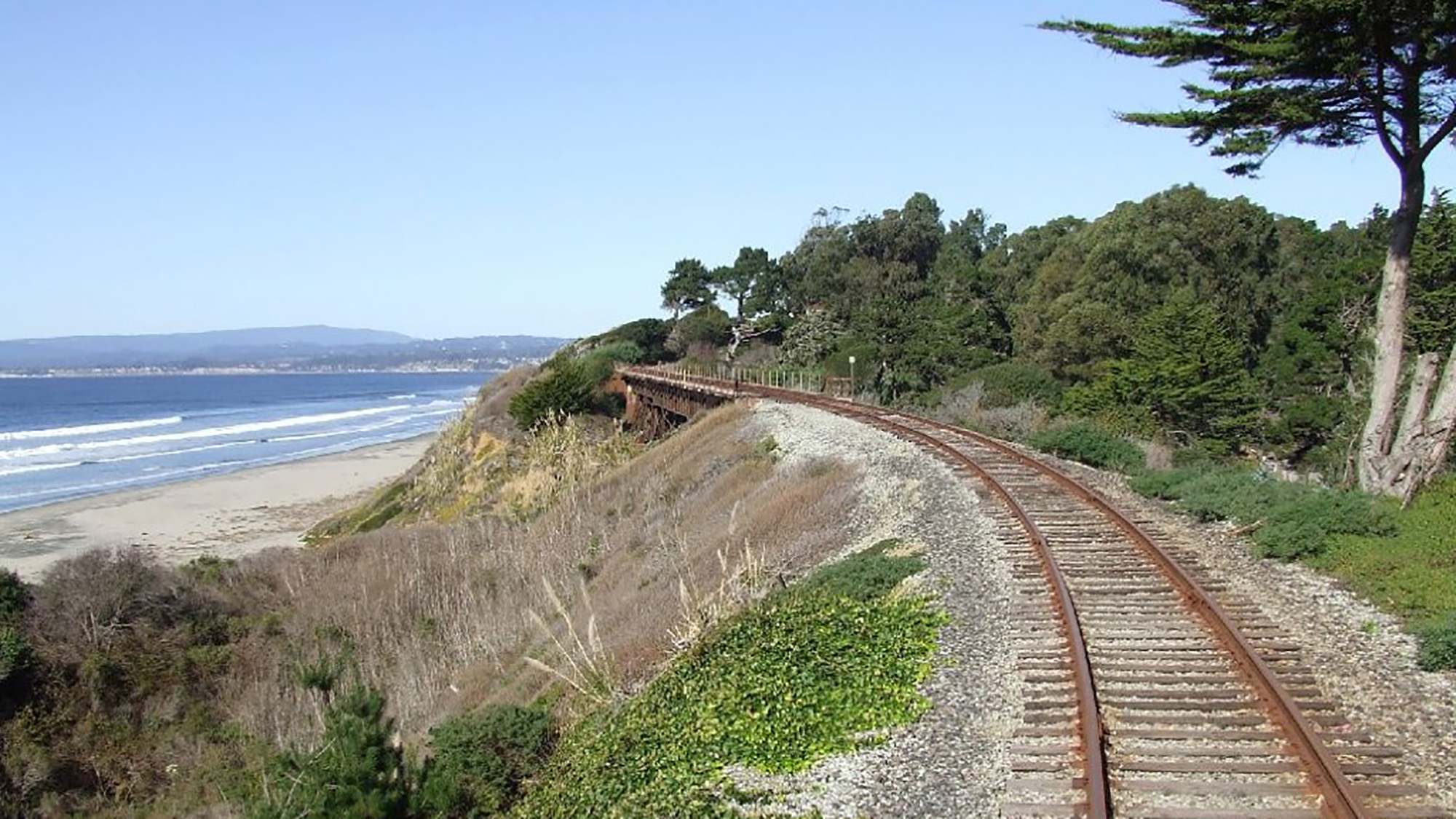
Harris is providing civil design services for the electrification work as a subcontractor to PGH Wong. The project involves more than 51 miles of track, 17 cities, and three counties in the Bay Area.
Work on the project began in 2017, and two segments of the project—from South San Francisco to Menlo Park and from Santa Clara to San Jose—have been completed. Work is ongoing on the remaining two segments—from San Francisco to Brisbane and from Menlo Park to Santa Clara.
Core Elements
Harris’ scope of engineering work on the Caltrain electrification includes:
- Preparing existing utility base mapping (wet and dry);
- Identifying Joint Power Board (JPB) versus non-JPB utilities;
- Reviewing existing as-builts, record drawings, maps, and survey data;
- Resolving utility conflicts;
- Verifying any utility conflicts with proposed electrification improvements;
- Identifying High-Risk Facilities;
- Limiting utility transverse crossings (non-JPB utilities out of Caltrain’s ROW);
- Designing the oil water separator for the ten new traction power facilities;
- Relocating all existing utilities around the new locations of the traction power sites; and
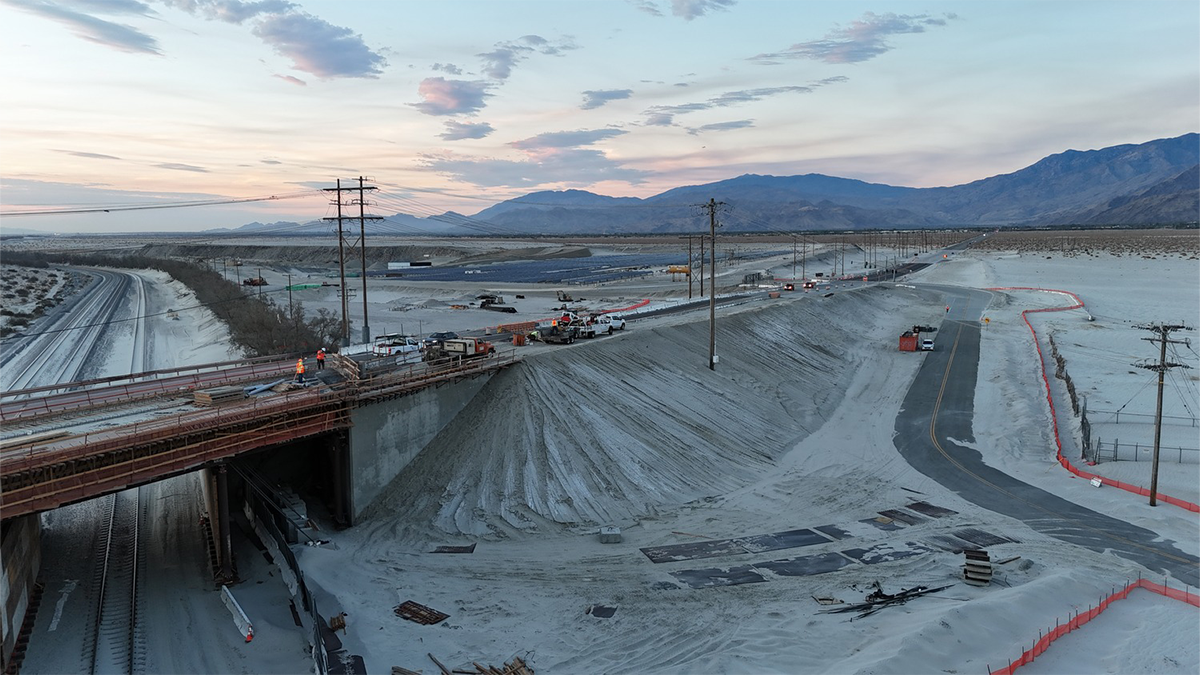
- Utility encasement designs for existing pressurized utilities that are attached and exposed under the Caltrans and city-owned bridges.
Beyond The Blueprints
The Caltrain Modernization Program represents one of the largest commuter rail electrification efforts in the United States, transforming how people travel throughout the Bay Area. Beyond delivering utility engineering and civil design services, Harris plays a key role in helping advance a complex, multi-jurisdictional infrastructure program spanning 51 miles of active rail corridor, 17 cities, and three counties.
By proactively identifying utility conflicts, coordinating relocations, and supporting the design of critical traction power facilities, Harris helps reduce construction risk, minimize service disruptions, and keep this landmark transportation investment moving forward. The electrification of Caltrain will improve reliability, increase system capacity, reduce greenhouse gas emissions, and provide a quieter, more comfortable passenger experience—creating long-term environmental and mobility benefits for the communities it serves.
Client
Caltrain
Location
Santa Clara, CA